
Blog
Chunking vs. Tokenization: Key Differences in AI Text Processing
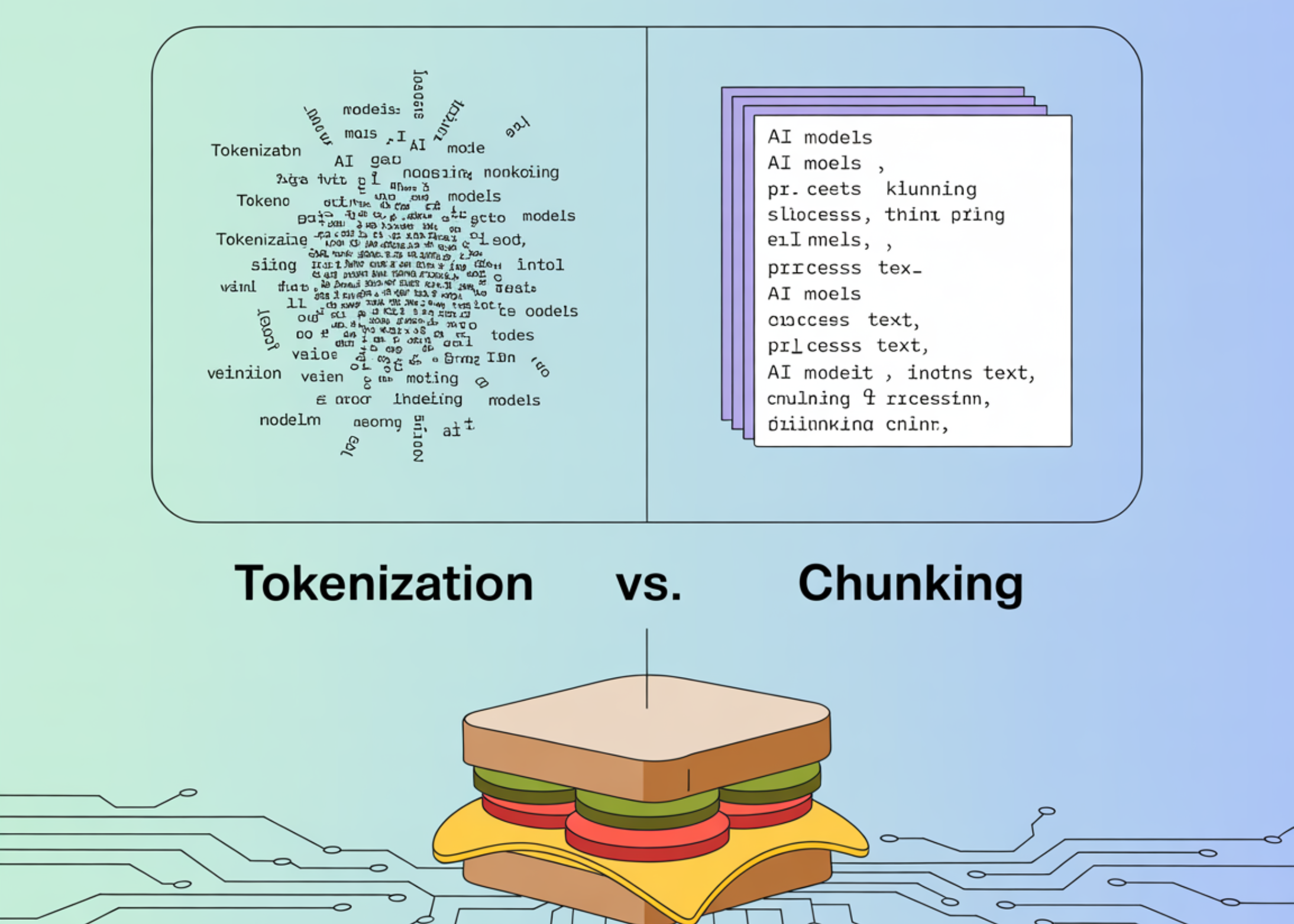
Understanding Chunking and Tokenization in AI Text Processing
In the realm of artificial intelligence and natural language processing (NLP), two pivotal concepts emerge: chunking and tokenization. While both techniques are geared towards breaking down text into more manageable parts, they serve distinct purposes and employ different methods. This article delves into the nuances of chunking and tokenization, highlighting their key differences, applications, and relevance in AI text processing.
What is Tokenization?
Tokenization is the initial step in text processing where raw text is converted into smaller, manageable units called tokens. These tokens can be individual words, phrases, or even symbols. The primary aim of tokenization is to simplify text for further analysis, making it easier to apply various NLP tasks.
Types of Tokenization
-
Word Tokenization: This method divides text into individual words. For instance, the sentence "ChatGPT is incredible!" becomes ["ChatGPT", "is", "incredible", "!"]. This approach is particularly useful in sentiment analysis and keyword extraction.
-
Character Tokenization: Instead of segmenting into words, character tokenization breaks text into its constituent characters. For example, "AI" would be tokenized into ["A", "I"]. This is commonly employed in language modeling and text generation tasks.
- Sub-word Tokenization: A hybrid approach that combines aspects of word and character tokenization. This technique can handle out-of-vocabulary words effectively by breaking them down into smaller meaningful units, such as prefixes and suffixes.
What is Chunking?
Chunking, in contrast, is a more advanced NLP technique focusing on grouping tokens into larger, meaningful structures known as chunks. Unlike tokenization, chunking aims to convey contextual information. For example, in the phrase "The quick brown fox," chunking would group relevant tokens into phrases, such as a noun phrase (NP) or verb phrase (VP).
Benefits of Chunking
- Enhanced Context Understanding: Chunking allows NLP systems to recognize relationships between words and phrases, enhancing their comprehension of the text.
- Improved Accuracy: By identifying syntactic structures, chunking contributes to more accurate parsing of sentences, which is essential for tasks like machine translation.
- Streamlined Information Extraction: Chunking assists in efficiently extracting key information, such as names or dates, from larger text bodies.
Key Differences Between Chunking and Tokenization
While chunking and tokenization might seem similar at first glance, several key distinctions set them apart:
Purpose
- Tokenization primarily focuses on breaking text down into its fundamental components, enabling subsequent processing like analysis or modeling.
- Chunking goes a step further by organizing these tokens into meaningful phrases that reflect the structure of the text, allowing for deeper semantic analysis.
Granularity
- Tokenization deals with smaller units (words, characters, or sub-words), making it a basic level of text analysis.
- Chunking operates at a higher level, aggregating these small units into chunks that carry more meaning in context.
Complexity
- Tokenization is typically simpler and can often be executed using basic algorithms that define rules for segmentation.
- Chunking requires more complex algorithms that take grammar and syntax into account, often utilizing linguistic rules and models for accurate phrase identification.
Applications of Tokenization and Chunking
Both tokenization and chunking play crucial roles in various applications, which include:
Natural Language Understanding
Understanding context is vital for developing chatbots and virtual assistants, where tokenization lays the groundwork by breaking phrases into understandable units, while chunking helps in deriving meaning.
Text Classification and Sentiment Analysis
By transforming text into tokens, it becomes feasible to analyze and classify content. Chunking further refines this process by helping to identify specific phrases or sentiment-laden expressions.
Machine Translation
Tokenization simplifies the source text, while chunking assists in preserving the syntactic relationships necessary for accurate translation.
Information Retrieval
In search engines and databases, tokenization aids in identifying searchable terms, while chunking can streamline the extraction of relevant results or summaries.
Challenges in Tokenization and Chunking
Despite their importance, both techniques pose certain challenges that can affect the efficiency of text processing:
Ambiguities in Language
Words can have multiple meanings depending on context, complicating the tokenization process. For instance, “bank” may refer to a financial institution or the side of a river. Proper chunking can help resolve these ambiguities but requires sophisticated models.
Handling Abbreviations and Slang
While tokenizers need to accommodate variations like contractions or abbreviated forms, chunkers must also identify whether these tokens fit into a larger speech context.
Language Variability
Each language may have unique grammatical rules, necessitating tailored approaches to both tokenization and chunking. For example, languages with compound words or rich morphological variations may require more advanced strategies.
Conclusion
Tokenization and chunking are fundamental components of AI text processing, each serving its own purpose while complementing the other. Tokenization breaks down text into manageable units, while chunking organizes these units into meaningful structures, enhancing context and understanding. As natural language processing continues to evolve, mastering these techniques will be essential for developing more sophisticated AI applications. Understanding their differences, tools, and applications paves the way for innovations in AI that drive effective communication, understanding, and interaction.
