
Blog
A Visual Guide to Tuning Decision-Tree Hyperparameters
Understanding Decision Trees and Hyperparameters
Decision trees are powerful tools in the realm of machine learning, widely used for classification and regression tasks. Their intuitive structure mimics human decision-making processes, making them easily interpretable. However, to harness their full potential, tuning the hyperparameters is crucial. This guide explores the various hyperparameters of decision trees, providing insights into their impact and how to optimize them for better performance.
What are Decision Trees?
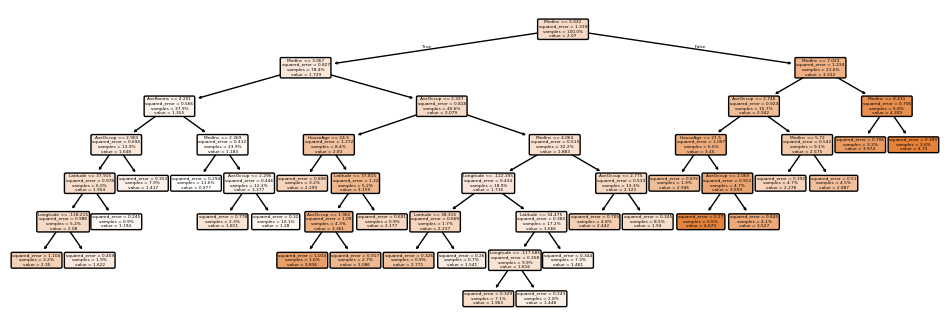
At their core, decision trees function by splitting data into subsets based on specific attributes. Each internal node represents a decision point, while the leaf nodes represent the final outcome or prediction. Their flexibility and ease of understanding have made them a popular choice among data scientists, but they can sometimes overfit the training data, leading to poor generalization on unseen data.
The Importance of Hyperparameter Tuning
Hyperparameters are configurations external to the model that dictate its structure and behavior. They influence how a model learns from the data and can greatly impact its accuracy and relevance. Tuning these hyperparameters is essential for achieving optimal performance and ensuring that the decision tree generalizes well to new data.
Key Hyperparameters in Decision Trees
Several hyperparameters play a significant role in shaping decision trees. Understanding their function is vital for effective tuning.
1. Maximum Depth
The maximum depth of a decision tree limits how many times the tree can split the data. A deeper tree may capture more patterns, but it also increases the risk of overfitting. Balancing depth is crucial, as a shallow tree might not capture enough complexity.
2. Minimum Samples Split
This hyperparameter determines the minimum number of samples required to split an internal node. A higher value results in fewer splits and can prevent overfitting by ensuring that decisions are made on a more substantial portion of the data.
3. Minimum Samples Leaf
Similar to minimum samples split, the minimum samples leaf sets the smallest number of samples that must be in a leaf node. This parameter helps to ensure that leaves contain enough information, which can improve the tree’s predictive power.
4. Maximum Features
This parameter specifies the number of features to consider when looking for the best split. By limiting the features, you can reduce overfitting and enhance generalization. It also speeds up training by simplifying the search for the best splits.
5. Criterion
The criterion hyperparameter defines the function used to measure the quality of a split. Common criteria include Gini impurity and entropy for classification tasks, while mean squared error is often used for regression. Selecting the right criterion can affect how well the tree distinguishes between different classes or predicts numerical targets.
Strategies for Hyperparameter Optimization
Tuning hyperparameters can be a daunting task, but several strategies can simplify the process.
1. Grid Search
Grid search is a systematic method that involves evaluating a model for every combination of hyperparameter values specified in a multi-dimensional grid. While comprehensive, it can be time-consuming and resource-intensive, especially with large datasets or numerous hyperparameters.
2. Random Search
Random search randomly samples combinations of hyperparameters from a specified range. This method is often more efficient than grid search, as it can uncover optimal settings without exhaustively testing every combination. It also allows for exploring a broader space of hyperparameter values.
3. Bayesian Optimization
This technique builds a probabilistic model of the objective function and uses it to select the most promising hyperparameters for evaluation. Bayesian optimization is particularly useful for complex models, as it learns from previous evaluations to focus on regions of the hyperparameter space that are likely to yield better results.
Evaluating Model Performance
Once hyperparameters are tuned, it’s essential to evaluate the model’s performance. Common practices include:
1. Cross-Validation
Cross-validation involves splitting the data into training and validation sets multiple times to ensure that the model is robust and generalizes well. This technique helps in mitigating issues related to overfitting and gives a more accurate measure of a model’s performance.
2. Performance Metrics
Selecting appropriate metrics is critical for evaluating the effectiveness of your decision tree. Depending on the task, you might consider accuracy, precision, recall, F1 score, or mean squared error, among others.
Practical Considerations
When tuning hyperparameters for decision trees, keep these practical tips in mind:
1. Start with Defaults
Begin by using the default hyperparameter settings provided by your machine learning library. This baseline will give you a point of reference and help you understand how much improvement can be achieved through tuning.
2. Focus on Business Goals
Always align your hyperparameter tuning efforts with the specific goals of your project. Determine what factors are most important—accuracy, interpretability, speed—and prioritize your tuning strategy accordingly.
3. Document Your Process
Keep a detailed record of the hyperparameter settings tested, the results obtained, and any adjustments made along the way. This documentation will be invaluable for future projects and help replicate successful outcomes.
Conclusion
Tuning hyperparameters in decision trees is a vital step in optimizing model performance. By carefully adjusting parameters like maximum depth, minimum samples split, and more, you can enhance model accuracy and resilience against overfitting. Employing strategies like grid search, random search, or Bayesian optimization can streamline this process, allowing for effective evaluations through techniques like cross-validation and thorough performance metrics.
By understanding and experimenting with these hyperparameters, you’ll be better equipped to implement decision trees that not only perform well but also meet the specific needs of your projects. As you dive deeper into the world of machine learning, these foundational skills will serve you well, leading to more effective and interpretable models established on sound decisions.
