
Blog
A Comprehensive Coding Guide to Building Interactive Experiment Dashboards with Hugging Face Trackio
Introduction
Creating interactive experiment dashboards can significantly enhance data visualization and analysis. By leveraging frameworks like Hugging Face’s Trackio, developers can streamline the process of building comprehensive dashboards that effectively showcase experimental results. This guide will walk you through the essential steps needed to create interactive dashboards using Trackio, highlighting best practices and useful tips.
What is Hugging Face Trackio?
Hugging Face Trackio is an innovative tool designed for tracking machine learning experiments. It simplifies the process of logging model performance metrics and visualizing results. The intuitive interface and powerful features make it an excellent choice for developers and data scientists seeking to improve their workflows.
Key Features of Trackio
- Real-time Logging: Easily log metrics during model training to track performance in real time.
- User-friendly Interface: An intuitive dashboard that makes it easy to navigate through different experiments.
- Visualization Tools: Powerful visualization capabilities to help you interpret results effectively.
Setting Up Your Environment
Before diving into development, it’s crucial to set up your coding environment properly. Here are the steps to create a suitable environment for using Trackio.
1. Install Necessary Packages
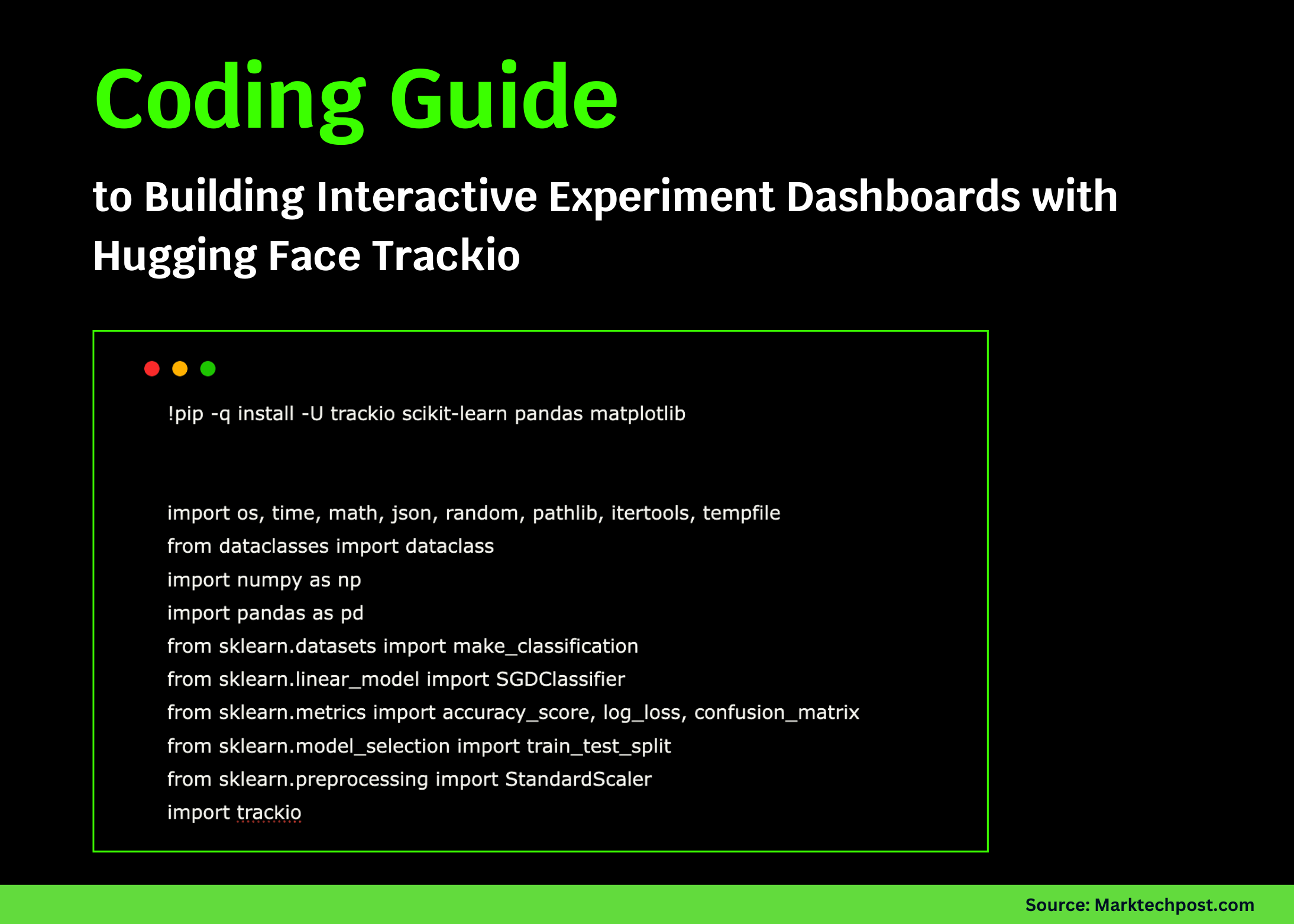
Begin by installing essential Python packages. You’ll need Trackio, along with other libraries like Pandas for data manipulation and Matplotlib for visualizations. Use the following command:
bash
pip install trackio pandas matplotlib
2. Configure Your IDE
Choose an Integrated Development Environment (IDE) that you are comfortable with, such as PyCharm or VSCode. Ensure that your IDE is configured to recognize your installed packages to avoid runtime errors.
Building Your Dashboard
Now that your environment is ready, you can start building your interactive dashboard.
Step 1: Initialize Trackio
To begin using Trackio, import the library and set up a tracking session. This will enable you to log metrics throughout your experiments.
python
import trackio
Initialize Trackio session
trackio.init(experiment_name="My Experiment")
Step 2: Log Experiment Metrics
During your model’s training phase, log vital performance metrics such as accuracy, loss, and other relevant parameters. This captures essential data points for later analysis.
python
for epoch in range(num_epochs):
Train your model
train_loss, train_accuracy = train(model, data_loader)

# Log metrics
trackio.log_metric("loss", train_loss, step=epoch)
trackio.log_metric("accuracy", train_accuracy, step=epoch)
Step 3: Visualize Your Data
Once you have recorded the necessary metrics, utilize Trackio’s visualization tools to create insightful graphs and charts. This step is crucial for helping stakeholders understand the data.
python
import matplotlib.pyplot as plt
Example: Plotting accuracy
accuracy_values = trackio.fetch_metric("accuracy")
plt.plot(accuracy_values)
plt.title("Model Accuracy Over Epochs")
plt.xlabel("Epoch")
plt.ylabel("Accuracy")
plt.show()
Enhancing Interactivity
To make your dashboard even more engaging and user-friendly, consider the following enhancements.
Interactive Graphs
Libraries like Plotly can create interactive graphs that allow users to hover over data points for more information. Here’s a simple example using Plotly:
python
import plotly.graph_objs as go
fig = go.Figure()
fig.add_trace(go.Scatter(x=epochs, y=accuracy_values, mode=’lines+markers’))
fig.update_layout(title=’Model Accuracy Over Epochs’, xaxis_title=’Epoch’, yaxis_title=’Accuracy’)
fig.show()
Filters and Dropdowns
Incorporating filters and dropdown menus allows users to select specific parameters or datasets they wish to analyze. This functionality can be built with front-end technologies like JavaScript or integrating a Python web framework such as Flask.
Live Updates
Implementing real-time updates enables users to view changes in metrics as they occur. This feature can be achieved through WebSocket connections or REST APIs that trigger data refreshment on the dashboard.
Best Practices
To ensure your dashboard is efficient and user-friendly, follow these best practices:
Keep It Simple
Avoid cluttering your dashboard with unnecessary information. Focus on key metrics that provide meaningful insights into your experiments.
Use Consistent Styling
A cohesive visual design enhances usability. Ensure that colors, fonts, and layouts are consistent throughout the dashboard to create a professional appearance.
Test User Experience
Before launching your dashboard, conduct user testing to identify any usability issues. Gather feedback to make necessary improvements and ensure the interface is intuitive.
Common Challenges and Solutions
While building an interactive dashboard with Trackio, you may encounter several challenges. Here are some common issues and their solutions.
Data Logging Issues
Sometimes metrics may not log correctly due to configuration errors. To resolve this, double-check your Trackio setup and ensure that you have initialized the session properly before starting your training loop.
Performance Bottlenecks
If your dashboard becomes slow, particularly with large datasets, consider optimizing your data fetching and visualization. Using sampling techniques or aggregating data points can help improve performance.
Browser Compatibility
Different browsers may render your dashboard inconsistently. Test your dashboard on various browsers to ensure compatibility and consider using CSS frameworks that promote responsiveness.
Conclusion
Creating interactive experiment dashboards with Hugging Face Trackio can significantly enhance your data analysis and visualization capabilities. By following this guide, you can build a functional and engaging dashboard that meets your tracking needs and provides valuable insights into your experiments. Emphasize best practices, and don’t hesitate to iterate based on user feedback. Happy coding!
