
Blog
Predict Extreme Weather Events in Minutes Without a Supercomputer
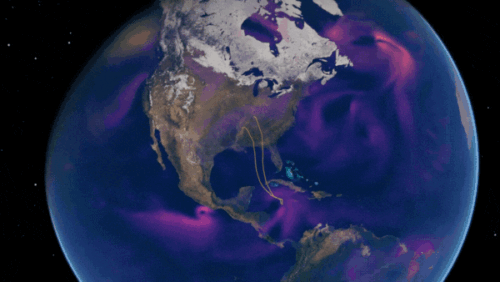
Understanding Extreme Weather Prediction
In recent years, the unpredictability of extreme weather events has raised alarms worldwide. From devastating hurricanes to unexpected blizzards, having advance notice of these phenomena can save lives and minimize damage. Traditionally, predicting such events required massive computational resources. However, advancements in technology now allow for more accessible and efficient methods of forecasting extreme weather.
The Evolution of Weather Prediction
Weather forecasting has come a long way since its humble beginnings. Early predictions relied on observation and basic meteorological principles. As technology advanced, meteorologists began using complex supercomputers to analyze data from satellites, weather stations, and climate models. While these systems have vastly improved our understanding, they come with a hefty price tag and require significant infrastructure.
Today, however, a new approach is emerging: leveraging artificial intelligence (AI) and machine learning (ML) tools can make extreme weather predictions easier and faster, without the need for supercomputing resources.
Harnessing AI and Machine Learning
What Are AI and Machine Learning?
Artificial intelligence refers to computer systems designed to simulate human intelligence. Machine learning, a subset of AI, focuses on the idea that machines can learn from data, identify patterns, and make decisions with minimal human intervention. By employing these technologies, researchers are exploring new pathways for predicting extreme weather.
Data Collection
The backbone of any effective prediction system is robust data collection. Meteorologists collect vast amounts of data from various sources, including:
- Weather stations
- Satellites
- Buoys
- Radar systems
Today’s predictive models utilize this rich tapestry of data, allowing for a more rounded approach to forecasting.
Algorithms in Action
Using sophisticated algorithms, machine learning systems can analyze historical data alongside real-time observations. By recognizing patterns associated with different weather conditions, these algorithms can make informed predictions that are both timely and accurate.
Real-Time Forecasting
Fast Analysis of Changing Conditions
One of the main advantages of utilizing AI and ML in weather prediction is their ability to process vast amounts of data quickly. Unlike traditional systems, which might take hours to generate a forecast, modern algorithms can analyze emerging data in real-time. This allows for quicker responses to changing weather conditions.
Alert Systems
Integrated alert systems can benefit immensely from these technologies. By providing timely notifications about severe weather conditions, communities can implement safety measures ahead of time. Whether it’s evacuating coastal areas ahead of a hurricane or preparing emergency services for an impending snowstorm, real-time alerts are critical.
User-Friendly Applications
Making Predictions Accessible
Not only are these technological advancements helping meteorologists, but they’re also leading to the development of user-friendly applications. Individuals now have access to sophisticated predictive platforms that allow them to monitor weather developments in their vicinity.
These platforms often feature intuitive interfaces that display weather predictions in a straightforward manner. Users can simply input their location and receive tailored forecasts, making weather data more accessible than ever.
The Role of Crowdsourcing
Moreover, crowdsourcing plays a vital role in making weather predictions both immediate and community-oriented. Users can report local conditions, which feeds into the larger predictive models, enriching the data pool and enhancing forecast accuracy.
Benefits of Predictive Technologies
Improved Accuracy
The integration of AI and machine learning in weather prediction not only enhances speed but also improves accuracy. More precise predictions help to save lives, protect property, and mitigate the economic impacts of extreme weather.
Cost-Effective Solutions
As weather prediction tools become easier to access, the cost of implementing these technologies decreases. No longer constrained by the need for supercomputers, smaller organizations and even startups can develop their forecasting systems.
Resilience Building
Community resilience can be significantly bolstered through real-time weather predictions. With accurate forecasts, cities and towns can prepare for incoming extreme weather, fostering a culture of readiness that can significantly reduce damage and loss.
Challenges and Considerations
Data Quality
Despite advancements, the effectiveness of predictive models heavily depends on the quality of the data being used. Inaccurate or outdated information can lead to misleading forecasts. It’s crucial for organizations to prioritize data collection and validation for reliable predictions.
Technology Access
While many regions around the world are benefiting from these technologies, there remain areas with limited access to the necessary infrastructures, such as high-speed internet. Bridging this digital divide is essential for equitable access to predictive weather technologies.
Ethical Implications
As with any technology, ethical considerations should guide the development and implementation of AI and machine learning systems in weather prediction. Ensuring transparency, accountability, and fairness in these systems can help gain public trust.
The Future of Weather Prediction
Continuous Learning and Improvement
As AI continues to evolve, so too will the methods we use for weather prediction. The future holds promise for enhanced models that will take into account a wider array of factors influencing weather patterns, such as climate change and urbanization.
Integration with Urban Planning
Collaboration between meteorologists, urban planners, and policymakers can foster integrated approaches to extreme weather preparedness. Developing urban infrastructure that adapts to predicted weather patterns can significantly improve community resilience.
Investing in Research and Development
To fully harness the potential of AI and machine learning in weather prediction, ongoing investment in research and development is critical. By fostering innovation, we can enhance our forecasting capabilities and contribute to safer, more resilient communities.
Conclusion
The prediction of extreme weather no longer solely depends on supercomputers and large-scale infrastructures. With advancements in AI and machine learning, even smaller organizations can develop efficient forecasting systems that contribute to public safety. As we continue to refine these technologies and expand their reach, we move closer to a future where everyone can access reliable and timely weather predictions.
