
Blog
Building AI agents is 5% AI and 100% software engineering
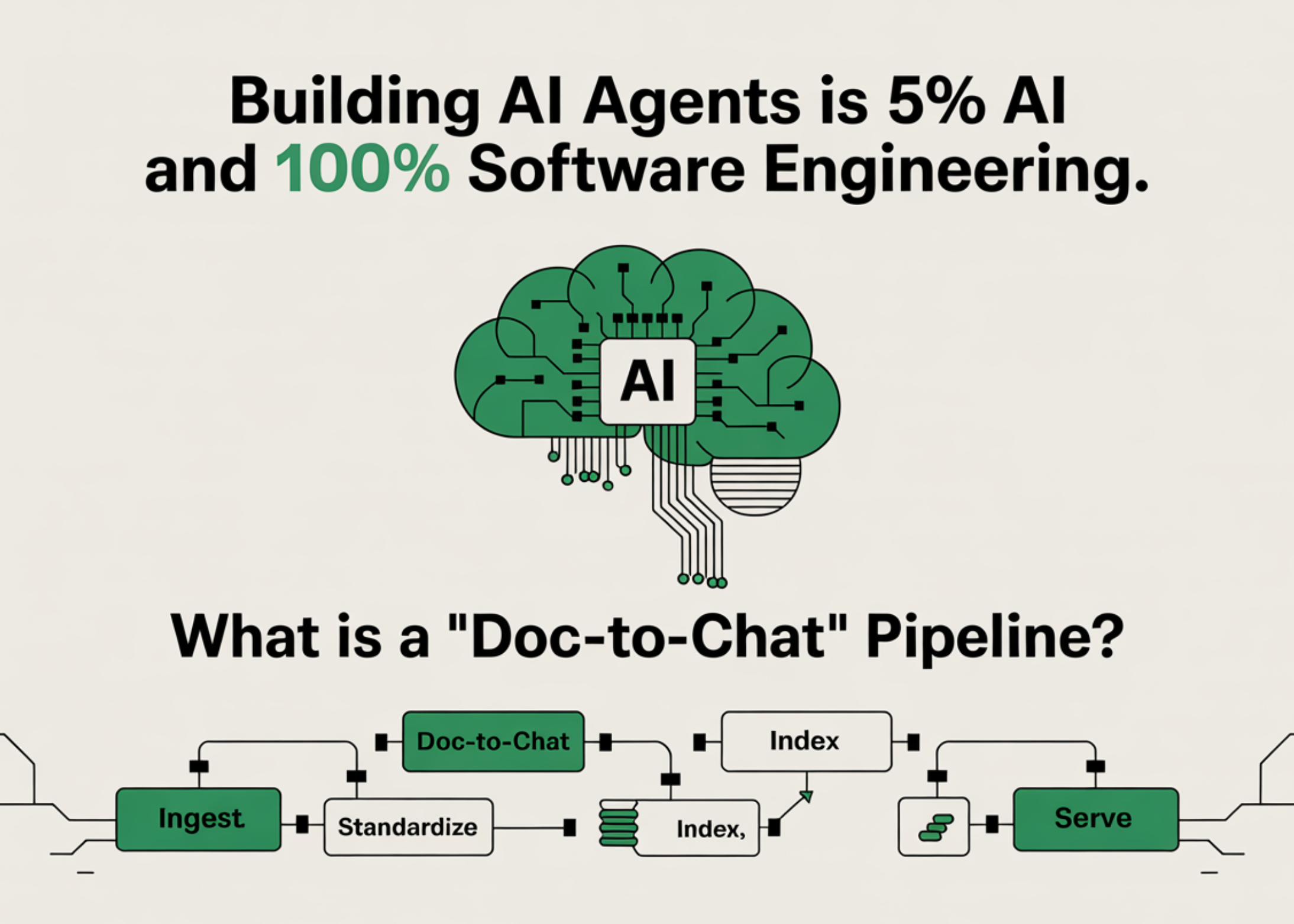
The Intersection of AI and Software Engineering
In today’s rapidly evolving technological landscape, the relationship between artificial intelligence (AI) and software engineering has become increasingly intertwined. As businesses and developers strive to create cutting-edge AI solutions, it’s essential to understand that the process is not solely centered on AI concepts but also heavily relies on robust software engineering practices.
Understanding AI Agents
AI agents are systems designed to autonomously perform specific tasks. They leverage algorithms and computational models to learn from data, make decisions, and adapt over time. While an AI agent’s intelligence is often showcased in decision-making abilities, the foundation of its effectiveness lies in the software that powers it.
The 5% of AI
When we say that building AI agents comprises about 5% AI, it emphasizes that the core algorithms utilized may be sophisticated, but they are just a fraction of the entire development process. The AI algorithms typically fall into three main categories:
-
Supervised Learning: This involves training a model on a labeled dataset, guiding the AI to predict outcomes based on input data.
-
Unsupervised Learning: Here, the model identifies patterns in data without predefined labels, making it ideal for tasks like clustering and dimensionality reduction.
- Reinforcement Learning: This type of learning mimics how humans learn by rewarding desired behaviors, allowing agents to improve through trial and error.
Despite the advanced nature of these algorithms, successful implementation requires deep knowledge of software engineering to truly harness their potential.
The 100% Software Engineering Factor
The remaining 95% of building AI agents hinges on effective software engineering. This includes aspects such as architecture design, coding, testing, and deployment. Let’s break down the critical components that contribute to this engineering-centric approach:
1. Architecture Design
Creating an AI agent starts with a robust architecture. Developers must outline how the AI will interact with other system components. This involves determining the appropriate frameworks, libraries, and tools needed to support the algorithms.
- Microservices Architecture: Leveraging microservices enables developers to build scalable, maintainable AI applications by breaking down monolithic systems into smaller, more manageable components.
- Data Pipelines: Designing efficient data pipelines ensures that AI agents have access to high-quality data for training and inference.
2. Coding Practices
High-quality code is the backbone of any software project. When developing AI agents, engineers must focus on creating clean, maintainable code that adheres to best practices.
- Version Control: Utilizing version control systems like Git allows teams to collaborate effectively and track changes over time.
- Modularity: Writing modular code makes it easier to test, debug, and reuse components across different projects.
3. Testing and Validation
Before deploying AI agents, thorough testing is critical. Various types of testing can be employed to validate the functionality and performance of the AI systems.
- Unit Testing: Testing individual components helps catch errors early in the development phase.
- Integration Testing: Ensures that various parts of the system work together seamlessly, especially when AI interacts with other software components.
4. Deployment and Monitoring
Deploying AI agents into production requires careful planning. Engineers must choose appropriate environments and consider scalability and performance.
- Continuous Integration/Continuous Deployment (CI/CD): Implementing CI/CD practices allows for frequent updates and improvements without causing system downtime.
- Monitoring Tools: Post-deployment, it’s crucial to monitor the AI agent’s performance and gather feedback to make necessary adjustments.
Challenges in AI Development
Developing AI agents is not without its challenges. Software engineers encounter several issues that require innovative solutions:
- Data Privacy and Security: As AI systems handle sensitive information, ensuring data protection is paramount. Compliance with regulations like GDPR is essential.
- Bias in Data: AI algorithms can inadvertently perpetuate biases if trained on flawed datasets. It’s crucial to implement fairness checks and diversify training data.
- Scalability: As usage grows, AI systems must scale efficiently. Engineers need to plan for increased data loads and user demands.
Best Practices for Successful AI Projects
To navigate the complexities of building AI agents, consider the following best practices:
-
Interdisciplinary Collaboration: AI projects benefit greatly from collaboration between data scientists, software engineers, and domain experts. This ensures a well-rounded approach to problem-solving.
-
Ethical Considerations: Always integrate ethical considerations into the development process. Understanding the potential societal impact of AI solutions helps guide responsible innovation.
- Stay Updated: The AI and software engineering fields are constantly evolving. Continuous learning and staying current with the latest technologies and methodologies can greatly enhance project outcomes.
Conclusion
In summary, the development of AI agents encompasses far more than just AI algorithms. While these algorithms form a critical part of the equation, the true success of AI implementations relies heavily on sound software engineering practices. By focusing on architecture, coding, testing, and deployment, developers can create efficient, effective AI agents that meet the demands of today’s technological landscape. Embracing this holistic approach not only enhances innovation but also ensures that AI solutions are robust, scalable, and responsible.
