
Blog
🚀 Botwriter: Automatically Publish on WordPress with AI | SEO Optimized 🤖
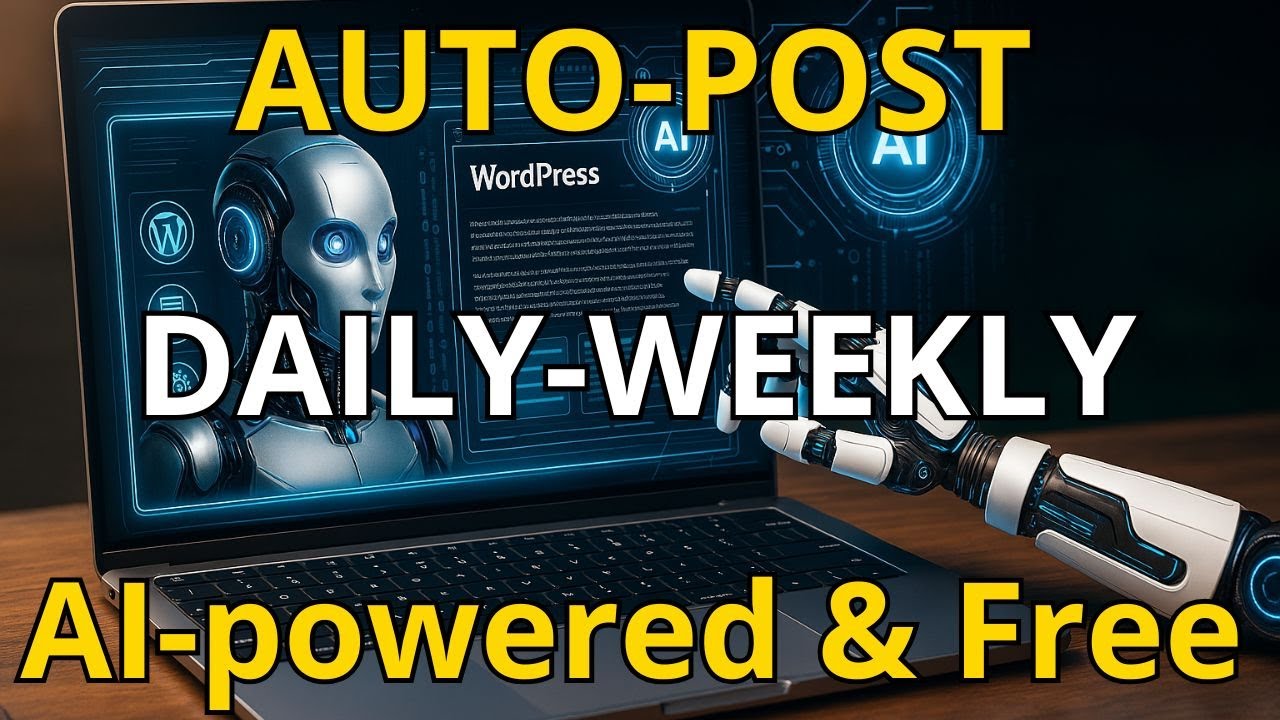
The digital landscape moves at an incredible pace. For content creators, marketers, and business owners, consistently publishing high-quality, engaging material is paramount to success. Yet, the process—researching, drafting, editing, optimizing, and scheduling—can be overwhelmingly time-consuming. What if you could streamline this entire workflow, turning a spark of an idea into a fully-formed, published blog post with minimal effort? This is no longer a futuristic concept. The emergence of advanced artificial intelligence is revolutionizing content creation, offering powerful tools to automate publishing directly to platforms like WordPress.
The Modern Content Challenge: Quality at Scale
Staying relevant and visible online demands a constant stream of fresh content. Search engines favor websites that update regularly with valuable information, and audiences engage with brands that consistently provide new insights. However, the pressure to "always be publishing" often leads to burnout, creative blocks, or a dip in content quality.
Manual content creation is fraught with bottlenecks:
- Time Intensive: A single, well-researched article can take hours, if not days, to complete.
- Resource Drain: It often requires a team of writers, editors, and SEO specialists.
- Inconsistency: Maintaining a uniform tone, style, and quality across numerous posts is challenging.
- SEO Complexity: Keeping up with ever-changing search engine algorithms and optimizing each piece correctly is a specialized skill.
This is where AI-driven automation steps in, not to replace human creativity, but to augment it, handling the heavy lifting to free up creators for strategic thinking.
Introducing AI-Powered Automated Publishing
Automated publishing with AI refers to the use of sophisticated software that can generate written content, optimize it for search engines, and publish it directly to a content management system (CMS) like WordPress without manual intervention. This technology leverages large language models (LLMs) that are trained on vast datasets, enabling them to produce text that is coherent, contextually relevant, and surprisingly human-like.
The core idea is to move from a fully manual process to a streamlined, semi-automated workflow. You provide the initial direction—a topic, keywords, an outline, or a few bullet points—and the AI takes it from there, transforming your input into a complete, formatted, and optimized draft ready for your website.
How AI Content Automation Works for WordPress
The process of integrating an AI automation tool with WordPress is typically seamless and designed for users of all technical skill levels. Here’s a breakdown of how it functions from conception to publication:
1. Ideation and Briefing
Every great piece of content starts with an idea. AI tools can often assist here as well, suggesting topics based on trending keywords in your niche. Once you have a subject, you provide the AI with a clear content brief. This includes the primary keyword, secondary keywords, desired tone of voice (e.g., professional, conversational, authoritative), and any specific points you want to be covered.
2. Content Generation
Using your brief, the AI engine gets to work. It analyzes the intent behind your keywords and constructs a logical article structure complete with headings and subheadings. It then generates the body content, fleshing out each section with informative text, data, and examples. The best tools produce long-form content that flows naturally and provides genuine value to the reader.
3. SEO Optimization
A critical step within the AI’s process is on-page SEO enhancement. The tool will strategically place your primary and secondary keywords in the title, headings, meta description, and throughout the body content at an optimal density. It will also ensure proper content length, add relevant latent semantic indexing (LSI) keywords to boost topical authority, and structure the article for readability, which is a key ranking factor.
4. Direct WordPress Integration
This is the pivotal feature. Once the content is generated and optimized, the tool doesn’t just hand you a text file. Instead, it connects directly to your WordPress site via the REST API. With proper authentication, it can create a new post draft, insert the fully formatted text (including HTML tags for headings, lists, and bold text), set featured images, add categories and tags, and even schedule the post for a specific publication date and time.
5. Human-in-the-Loop Review
Automation does not mean abdicating control. The most effective use of this technology incorporates a human review step. The AI handles the initial creation, but you remain the editor-in-chief. Before the post is published, you can review the draft within WordPress, make any nuanced edits, add personal anecdotes, or ensure the brand voice is perfectly captured. This hybrid approach guarantees quality and authenticity.
Key Advantages of Automating Your WordPress Content
Adopting an AI-powered publishing strategy offers a multitude of benefits that directly address the core challenges of modern content marketing.
Unmatched Efficiency and Speed
Drastically reduce the time between ideation and publication. What used to take a week can now be accomplished in hours. This allows you to respond quickly to industry news, trends, and new keywords, giving you a competitive edge.
Consistent Output and Scalability
Maintain a relentless publishing schedule without compromising on quality or exhausting your team. Whether you need one post a week or ten, AI automation allows you to scale your content production up or down based on your strategy, not your resource constraints.
Enhanced SEO Performance
These tools are built with SEO fundamentals baked into their process. By ensuring every article is optimized from the ground up, you improve your chances of ranking higher in search engine results pages (SERPs), driving more organic traffic to your site.
Data-Driven Content Creation
Many AI platforms can analyze top-performing content for any given keyword and identify what makes it successful. This allows the AI to emulate successful structures and cover topics more comprehensively, increasing the value and relevance of your content.
Navigating the Considerations and Best Practices
While powerful, AI content automation is a tool, and its effectiveness depends on how it’s used.
The Imperative of Human Oversight
AI is excellent at assembling information but lacks true human experience, empathy, and opinion. Always review and edit generated content. Infuse it with your unique perspective, brand personality, and firsthand expertise to create a connection with your audience that pure AI cannot replicate.
Focus on Quality and E-E-A-T
Google’s guidelines emphasize Experience, Expertise, Authoritativeness, and Trustworthiness (E-E-A-T). Content that is purely AI-generated without human refinement may struggle to demonstrate these qualities. Use AI as your research assistant and first draft writer, not your final author.
Choosing the Right Tool
Not all AI writing assistants are created equal. Look for platforms that specialize in long-form content, offer robust SEO features, and, most importantly, provide a reliable and secure direct publishing integration with WordPress. Evaluate their output quality through free trials before committing.
The Future of Content is Collaborative
The goal of AI-powered publishing is not to create a world of generic, robotic content. It is to eliminate the friction and tedium of the writing process, empowering creators, marketers, and businesses to produce more of the high-value content their audiences crave. By automating the routine tasks of drafting and optimizing, we free up cognitive resources for strategy, creativity, and analysis—the truly human elements that build a remarkable online presence.
This technology represents a shift toward a collaborative future, where human creativity is amplified by artificial intelligence. It allows us to work smarter, not just harder, ensuring that our ideas can flourish online without being bogged down by the mechanics of publication. Embracing this toolsets you up not just to keep pace with the digital world, but to lead within it.
