
Blog
What is AI Agent Observability? Top 7 Best Practices for Reliable AI
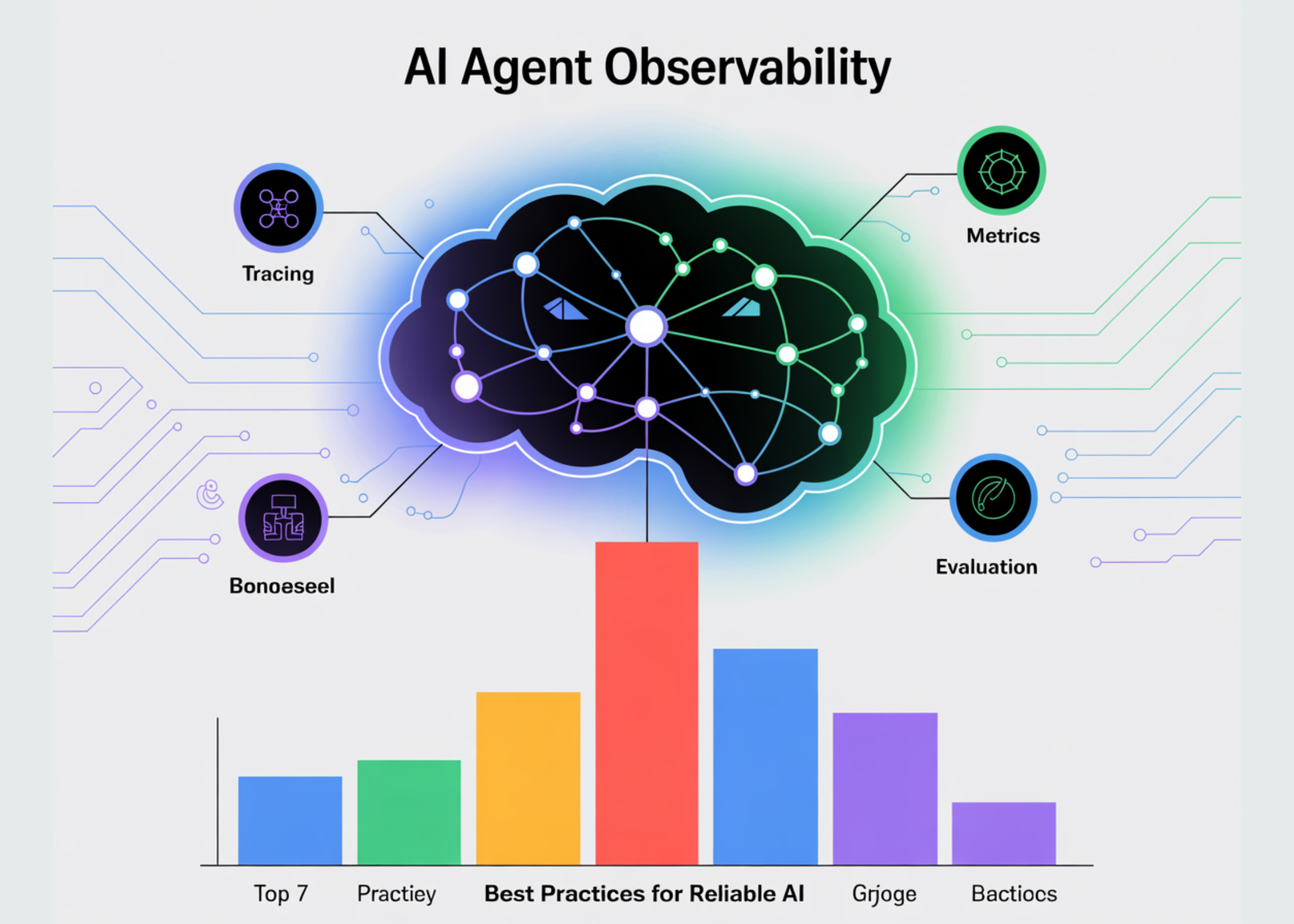
Understanding AI Agent Observability
As organizations increasingly rely on artificial intelligence (AI) to drive decision-making and enhance operational efficiency, the concept of AI agent observability has emerged as a crucial focus. Observability refers to the ability to monitor, assess, and understand the behavior of AI agents and systems. This capability is essential for ensuring that AI functions reliably and effectively.
AI agent observability is not merely about tracking performance metrics; it encompasses a holistic view of the AI’s functioning, including its decision-making processes, potential biases, and overall system health. In this post, we’ll delve into the importance of AI agent observability and outline the top seven best practices to achieve reliable AI performance.
Why AI Agent Observability Matters
The complexities involved in AI systems make observability paramount. When an AI agent functions as intended, it can vastly improve efficiency, uncover insights, and enhance user experiences. However, hidden issues within the system can lead to suboptimal performance, unexpected behaviors, or even ethical dilemmas.
With effective observability, organizations can:
- Identify Anomalies: Rapidly recognize problems before they escalate.
- Enhance Trust: Build confidence among stakeholders by ensuring transparency in AI operations.
- Inform Decisions: Use data-driven insights to refine models and improve outcomes.
Best Practices for AI Agent Observability
To foster a reliable AI deployment, consider the following best practices.
1. Implement Robust Monitoring Tools
Begin by establishing comprehensive monitoring solutions that track the performance metrics of AI agents. Utilize dashboards and data visualization technologies to offer real-time insights into how the AI is performing against set benchmarks. These tools should highlight key indicators, such as response times, accuracy rates, and model drift.
2. Establish Clear Performance Metrics
Defining what success looks like for your AI agents is vital. Develop specific, measurable performance metrics tailored to your use case. Typical metrics include precision, recall, and F1 score. Additionally, consider business-oriented metrics, such as customer satisfaction and return on investment (ROI), to align AI performance with organizational goals.
3. Promote Transparency
Transparency is fundamental in ensuring that AI systems are understandable and accountable. Providing insights into the decision-making processes of AI agents will help users to comprehend how outcomes are derived. This transparency is particularly important in sectors where ethical considerations are critical, such as healthcare and finance.
4. Regularly Test and Validate Models
Continuous testing and validation are essential for maintaining the integrity of AI models. Periodically assess the performance of AI agents using test datasets to identify any shifts in their behavior over time. A/B testing can also be useful to compare the effectiveness of different model versions. This practice helps in maintaining a high standard of performance and addressing any emerging issues swiftly.
5. Address Bias and Fairness
AI systems can inadvertently learn biases present in training data, leading to unfair outcomes. Observability includes actively monitoring for bias, ensuring that the AI agent operates fairly across diverse demographic groups. Incorporate fairness checks into your performance metrics and regularly assess the outcomes to identify and mitigate any unintended biases in AI decisions.
6. Foster Collaboration Across Teams
Encouraging collaboration among data scientists, software engineers, and business stakeholders is essential for effective observability. Create cross-functional teams that can share insights, discuss findings, and implement improvements collaboratively. This approach ensures that all perspectives are considered when monitoring AI performance and provides a well-rounded understanding of the AI’s impact across the organization.
7. Prepare for Continuous Improvement
AI is not static; it requires ongoing refinement. Cultivate a culture of continuous improvement where feedback loops are established to facilitate learning from observed outcomes. Regularly update your monitoring and evaluation frameworks to adapt to changes in technology and business needs. By committing to iterative improvements, organizations can enhance the reliability and effectiveness of their AI systems over time.
Conclusion
AI agent observability is critical to ensuring that artificial intelligence systems perform reliably and ethically in real-world applications. By implementing robust monitoring tools, establishing clear performance metrics, promoting transparency, and addressing bias, organizations can build trust in their AI systems. Additionally, fostering collaboration and committing to continuous improvement will further enhance the effectiveness and reliability of AI deployments.
In an era where AI is increasingly becoming a core element of business strategy, emphasizing observability is not just a technical requirement; it is a strategic necessity for long-term success. Implementing these best practices will equip organizations to leverage the full potential of AI while mitigating risks and building a foundation of trust and reliability in AI-driven decisions.
